Cognitive Anchor and Visual Transition — The Logic of Inheriting “Old Elements” and Creating “New Elements” in Brand Logo Symbol Design
前言:美学的陷阱与认知的博弈
在当前的品牌视觉竞争中,设计师常陷入一个悖论:追求极致的“创新”往往导致“认知失效”,而依赖“固有元素”则导致“品牌平庸”。
很多所谓的创新设计,本质上是在制造视觉噪音。当一个 Logo 完全脱离了用户的认知基座,它就从一个“信号”变成了一块“乱码”。相反,过度依赖行业固有元素(如医疗行业的十字、金融行业的盾牌)则会将品牌禁锢在平庸的集体潜意识中。
真正的顶级视觉构建,并非在“新”与“旧”之间做选择题,而是在认知锚点(Cognitive Anchor)与视觉跃迁(Visual Leap)之间建立一套精密且可控的逻辑协议。
第一章:认知锚点——视觉信号的“生存底线”
认知锚点是指用户在面对特定行业或产品时,大脑中预设的、无需思考即可识别的视觉基准。
从心智心理学角度看,人类大脑在处理新信息时,会自动寻找“相似性”以降低能耗。如果一个 Logo 彻底抛弃了认知锚点,用户的大脑会因为找不到索引而产生“认知阻力”,导致品牌记忆成本极高。
继承“旧元素”的本质,不是为了复刻,而是为了“低成本地建立信任”。
- 锚点的功能: 它是品牌的“身份准入证”。它告诉用户:“我属于这个领域,你可以用在该领域习惯的逻辑来理解我。”
- 继承的尺度: 成功的继承应当是“潜意识层面的唤醒”。它不需要直接出现那个符号,而可以通过比例、色彩权重、几何倾向等隐含信号来完成。
第二章:视觉跃迁——从“已知”到“定义”的跳跃
如果认知锚点决定了品牌的“生存底线”,那么视觉跃迁则决定了品牌的“竞争上限”。
视觉跃迁是指在保留核心锚点的基础上,通过引入一个或多个“陌生元素”,强行将用户的认知从“常规”拉向“独特”。这种“熟悉感 $\rightarrow$ 陌生感 $\rightarrow$ 新定义”的路径,正是品牌产生“高级感”的瞬间。
1. 发明创新元素的“语义迁移法”
创新元素不应是凭空产生的碎片,而应是通过语义迁移而来的逻辑产物。
- 逻辑链条: $\text{核心价值} \rightarrow \text{跨界隐喻} \rightarrow \text{几何抽象} \rightarrow \text{新元素}$。
- 实战模型: 若要为一个“稳健但敏捷”的 AI 医疗品牌设计 Logo,不能只用“心电图”或“药丸”(旧元素)。我们可以将“生物细胞的分裂”(新元素 $\rightarrow$ 增长/生命)与“等轴测几何体”(旧元素 $\rightarrow$ 严谨/医疗)相结合。通过将“生物形态”迁移至“工业几何”中,创造出一种从未见过但逻辑自洽的新符号。
2. 柔和新旧元素的“融合协议”
新旧元素的结合最忌讳“拼接感”。要实现视觉上的“柔和”,需要遵循一套融合协议:
- 几何共振 (Geometric Resonance): 确保新元素的曲率半径(Corner Radius)与旧元素的比例逻辑一致。当两者共享同一套几何母本时,大脑会认为它们属于同一个生命体。
- 视觉权重平衡 (Weight Balancing): 旧元素提供“重心(Stability)”,新元素提供“动势(Direction)”。通过调整粗细与空间的分布,让新旧元素在视觉能量上达成动态平衡。
第三章:实战工具——视觉元素的“模组化推演法”
为了将认知跃迁工程化,设计师需要一套将“基础几何(锚点)”转化为“创新符号(跃迁)”的推演路径。以下是针对最核心的“方”与“圆”的解构指南:
1. “圆”的认知演变路径:从【整体】到【碎片】
圆代表的固有认知是:统一、循环、包容、柔和。要实现跃迁,需打破“闭环”的思维。
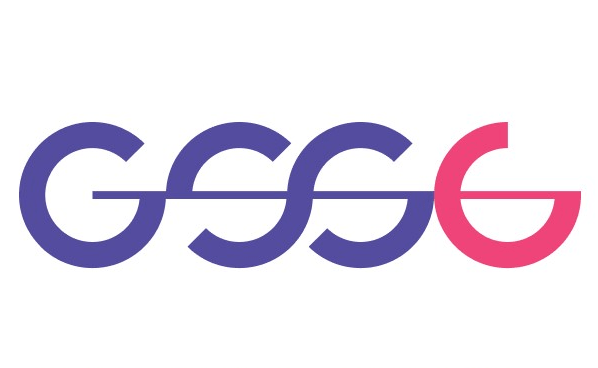
- 路径 A:线块重组(The Linear Block Method)
- 操作: 将圆拆解为等分的弧线或线块(参考月之暗面/Moonshot)。
- 效果: 将“闭合的圆” $\rightarrow$ “开放的阵列”。保留了圆的圆润感(锚点),但引入了秩序感和数字化气息(新元素)。
- 路径 B:点阵重构(The Dot-Matrix Reconstruction)
- 操作: 用等距的圆点或不规则点阵模拟出圆的轮廓。
- 效果: 将“实体的面” $\rightarrow$ “信息的点”。创造出一种“数据化”或“连接感”的暗示。
- 路径 C:动态切分与重叠(Slicing & Overlapping)
- 操作: 通过切片、负空间切割或半透明重叠,创造出新的几何交集。
2. “方”的认知演变路径:从【边界】到【无限】
方代表的固有认知是:稳定、严谨、边界、基石。要实现跃迁,需突破“封闭”的局限。
- 路径 A:线框解构(The Wireframe Deconstruction)
- 操作: 将实心方块转化为线框,或通过粗细不同的线组合成方。
- 效果: 将“沉重的基石” $\rightarrow$ “轻盈的架构”。赋予品牌一种“透明度”和“灵活性”。
- 路径 B:点阵点睛(The Accented Point Matrix)
- 操作: 用点阵组成方块,但通过改变其中一个点的颜色或位置打破对称。
- 效果: 在极强的秩序感中制造一个“变数”。传递出“在传统中创新”的品牌性格。
- 路径 C:四方连续与分形演变 (Tessellation & Fractal Evolution)
- 操作: 将一个方块作为母本,通过平移、旋转、缩放实现四方连续的阵列,或向内无限递归。
- 效果: 将“单一的方” $\rightarrow$ “无限的系统”。将品牌的认知从一个“点”扩展为一个“生态”。
第四章:打破适配诅咒——从“万能适配”到“场景匹配”
在传统的工业设计教育中,设计师被告知必须通过极其苛刻的“极小尺寸压力测试”——确保 Logo 在 16×16 像素下依然清晰完整。



但我们必须意识到:过度追求这种“万能适配”,本质上是一种认知上的自我阉割。
在数字媒介主导的今天,显示器精度已极高,且多样化的工艺(如 UV、烫金、特种材质)让视觉表达空间被极大地释放。如果一个 Logo 为了适配一个极小图标而失去了艺术张力与细节语义,那么它就失去了最核心的“视觉溢价”。
我们主张将“万能适配”升级为“场景化匹配 (Scenario-Based Matching)”:
- 高保真场景(主视觉/数字大屏/核心载体): 追求极致的艺术复杂感、丰富的语义、精细的渐变与细节。这是品牌“灵魂”的展现地,应允许其具有“艺术的复杂”。
- 低保真场景(极小图标/单色印刷/辅助载体): 允许符号进行简化,甚至仅保留一个“符号影子(Symbolic Shadow)”。只要核心心智(认知锚点)依然存在,细节的丢失不叫失败,而叫“适配”。
- 载体增强 (Carrier Enhancement): 面对复杂设计在低保真载体上的局限,不应通过简化设计来妥协,而应通过升级工艺(如用亮光 UV 凸显细节)来增强识别度。
结语:设计是关于“认知概率”的管理
一个顶级的 Logo 设计师,本质上是一个认知概率管理员。
他知道在什么位置放置“锚点”以确保用户不至于迷路,又知道在什么时机启动“跃迁”以确保用户被惊艳。最好的设计,是让用户在感到“似曾相识”的一瞬间,突然意识到这个品牌地处一个他从未想象过的维度。
Logo 的最终目的不是为了美,而是为了在用户的大脑中,精准地安装一个“高保真、低能耗且独一无二”的品牌索引。
这意味着,我们不再是在“画图”,而是在定义一种视觉协议。
English Version
Cognitive Anchor and Visual Transition — The Logic of Inheriting “Old Elements” and Creating “New Elements” in Brand Logo Symbol Design
Foreword: The Aesthetic Trap and the Game of Cognition
In today’s brand visual competition, designers often fall into a paradox: pursuing extreme “innovation” often leads to “cognitive failure,” while relying on “inherent elements” leads to “brand mediocrity.”
Many so-called innovative designs are essentially creating visual noise. When a Logo completely detaches from the user’s cognitive foundation, it transforms from a “signal” into “garbled code.” Conversely, over-reliance on industry-inherent elements (such as the cross in healthcare, the shield in finance) traps the brand in a mediocre collective unconscious.
True top-tier visual construction is not about choosing between “new” and “old,” but establishing a precise and controllable logic protocol between cognitive anchors (Cognitive Anchor) and visual leaps (Visual Leap).
Chapter 1: Cognitive Anchor — The “Survival Baseline” of Visual Signals
Cognitive anchor refers to the visual benchmark that users have pre-set in their brains when facing a specific industry or product — a benchmark they can recognize without thinking.
From the perspective of cognitive psychology, the human brain automatically seeks “similarity” to reduce energy consumption when processing new information. If a Logo completely abandons cognitive anchors, the user’s brain will generate “cognitive resistance” due to the inability to find an index, resulting in extremely high brand memory costs.
The essence of inheriting “old elements” is not to replicate, but to “build trust at low cost.”
- Function of the anchor: It is the brand’s “identity admission ticket.” It tells users: “I belong to this domain; you can use the logic familiar to that domain to understand me.”
- The scale of inheritance: Successful inheritance should be an “awakening at the subconscious level.” It does not need to directly present the symbol; instead, it can be accomplished through implicit signals such as proportion, color weight, and geometric inclination.
Chapter 2: Visual Leap — The Jump from “Known” to “Defined”
If cognitive anchors determine the brand’s “survival baseline,” then visual leap determines the brand’s “competitive ceiling.”
Visual leap refers to retaining the core anchor while introducing one or more “novel elements” to forcibly pull the user’s cognition from “conventional” to “unique.” This path of “familiarity → unfamiliarity → new definition” is precisely the moment when a brand generates a sense of “premium quality.”
1. The “Semantic Migration Method” for Inventing Innovative Elements
Innovative elements should not be fragments produced out of thin air, but logical products derived through semantic migration.
- Logic chain:
$\text{Core Value} \rightarrow \text{Cross-domain Metaphor} \rightarrow \text{Geometric Abstraction} \rightarrow \text{New Element}$. - Practical model: To design a Logo for a “robust yet agile” AI healthcare brand, one cannot simply use “ECG lines” or “pills” (old elements). Instead, we can combine “biological cell division” (new element → growth/life) with “isometric geometry” (old element → rigor/healthcare). By migrating “biological forms” into “industrial geometry,” we create a new symbol that has never been seen before yet is logically self-consistent.
2. The “Fusion Protocol” for Softly Blending Old and New Elements
The greatest taboo in combining old and new elements is a “patchwork feel.” To achieve visual “softness,” one must follow a fusion protocol:
- Geometric Resonance: Ensure that the curvature radius of the new element matches the proportional logic of the old element. When both share the same geometric parent, the brain perceives them as belonging to the same organism.
- Visual Weight Balancing: The old element provides “stability,” while the new element provides “momentum.” By adjusting the distribution of thickness and space, dynamic balance is achieved in visual energy between old and new elements.
Chapter 3: Practical Tools — The “Modular Deduction Method” of Visual Elements
To engineer cognitive leaps, designers need a deduction path that transforms “basic geometry (anchor)” into “innovative symbols (leap).” Below is a deconstruction guide for the most core shapes — “square” and “circle”:
1. The Cognitive Evolution Path of “Circle”: From [Wholeness] to [Fragmentation]
The inherent cognition of a circle is: unity, cycle, inclusiveness, softness. To achieve a leap, one must break the “closed loop” mindset.
- Path A: Linear Block Method (The Linear Block Method)
- Operation: Deconstruct the circle into equally divided arcs or linear blocks (referencing Moonshot AI).
- Effect: Transform “closed circle” → “open array.” This preserves the circle’s rounded quality (anchor) while introducing a sense of order and digital atmosphere (new element).
- Path B: Dot-Matrix Reconstruction (The Dot-Matrix Reconstruction)
- Operation: Use equidistant dots or irregular dot matrices to simulate the outline of a circle.
- Effect: Transform “solid surface” → “informational dots.” This creates an implication of “datafication” or “connectivity.”
- Path C: Dynamic Slicing and Overlapping (Slicing & Overlapping)
- Operation: Create new geometric intersections through slicing, negative-space cutting, or semi-transparent overlapping.
2. The Cognitive Evolution Path of “Square”: From [Boundary] to [Infinity]
The inherent cognition of a square is: stability, rigor, boundary, cornerstone. To achieve a leap, one must break through the limitations of “closed.”
- Path A: Wireframe Deconstruction (The Wireframe Deconstruction)
- Operation: Transform a solid square into a wireframe, or compose a square through lines of varying thickness.
- Effect: Transform “heavy cornerstone” → “lightweight structure.” This gives the brand a sense of “transparency” and “flexibility.”
- Path B: Accented Point Matrix (The Accented Point Matrix)
- Operation: Compose a square using a dot matrix, but break the symmetry by changing the color or position of one dot.
- Effect: Create a “variable” within a strong sense of order. This conveys a brand personality of “innovation within tradition.”
- Path C: Tessellation & Fractal Evolution (Tessellation & Fractal Evolution)
- Operation: Use a square as the parent shape, achieving tessellation arrays through translation, rotation, and scaling, or infinite recursion inward.
- Effect: Transform “single square” → “infinite system.” This expands the brand’s cognition from a “point” to an “ecosystem.”
Chapter 4: Breaking the Adaptation Curse — From “Universal Fit” to “Scenario-Based Matching”
In traditional industrial design education, designers are told they must pass an extremely harsh “minimum size stress test” — ensuring the Logo remains clear and complete at 16×16 pixels.
But we must recognize: over-pursuing this “universal fit” is essentially a form of cognitive self-mutilation.
In today’s digital-media-dominated world, display precision is extremely high, and diverse manufacturing processes (such as UV coating, gold stamping, specialty materials) have greatly expanded the space for visual expression. If a Logo loses artistic tension and semantic detail to fit an extremely small icon, then it has lost its core “visual premium.”
We advocate upgrading “universal fit” to “Scenario-Based Matching”:
- High-fidelity scenarios (main visuals / digital screens / core carriers): Pursue extreme artistic complexity, rich semantics, fine gradients, and detail. This is where the brand’s “soul” is displayed, and “artistic complexity” should be allowed.
- Low-fidelity scenarios (tiny icons / monochrome printing / secondary carriers): Allow the symbol to be simplified, even retaining only a “symbolic shadow.” As long as the core mindset (cognitive anchor) remains, the loss of detail is not a failure — it is “adaptation.”
- Carrier Enhancement: When facing the limitations of complex designs on low-fidelity carriers, do not compromise by simplifying the design. Instead, enhance recognizability by upgrading the manufacturing process (e.g., using glossy UV to highlight details).
Conclusion: Design Is the Management of “Cognitive Probability”
A top-tier Logo designer is essentially a cognitive probability manager.
They know where to place “anchors” to ensure users never get lost, and when to trigger “leaps” to ensure users are amazed. The best design makes users feel “familiar” for an instant, then suddenly realize this brand exists in a dimension they never imagined.
The ultimate purpose of a Logo is not beauty — it is to install a “high-fidelity, low-energy, and unique” brand index precisely in the user’s brain.
This means we are no longer “drawing pictures” — we are defining a visual protocol.
Original article: 认知锚点与视觉跃迁:品牌LOGO符号“旧元素”的继承与“新元素”的创作逻辑 on 17vis.com – Shanghai Apex Wings Brand Design Co., Ltd. Original article: 认知锚点与视觉跃迁:品牌LOGO符号“旧元素”的继承与“新元素”的创作逻辑 on 17vis.com – Shanghai Apex Wings Brand Design Co., Ltd.

为创作者 17vis 守护知识产权,转载必须保留完整出处信息 (侵权必究)
© 2026 17vis.com All Rights Reserved.