Lightweight VIS Brand Visual Management Handbook – Focus on Core + Reserve for Expansion: The Asset Delivery System for Minimal Viable Brand (MVB)
lightweight-vis-brand-identity-management-handbook-core-focus-reserved-scaling-asset-delivery-system
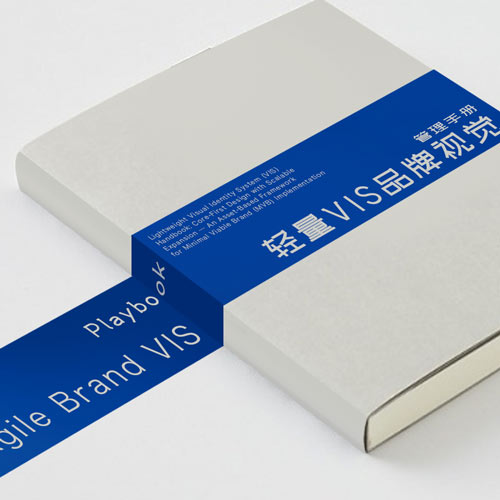
轻量VI品牌视觉管理手册—— 一套轻量品牌资产




一、轻量VI:品牌资产的另一种构建方式
传统VI手册自有其价值,但它的交付节奏,已不适配当下的品牌生长速度。
一套完整的VI系统,从调研到设计到交付,少则3个月,多则一年。当手册最终交付时,市场的窗口期可能已经关闭,竞品已率先完成占位。
更关键的问题在于:传统VI交付的是一本“手册”,而非一套“资产”。
手册会被翻阅、会折旧、会过时。资产会沉淀、会增值、可被继承。
品牌建设不应等待规范完备之后才开始。 当代商业环境的节奏要求品牌在“没有完整规范”的情况下先行启动,在运行中迭代体系。轻量VI品牌视觉管理手册,正是为此而生的资产化交付体系。
传统VI与轻量VI的对照
| 维度 | 传统VI | 轻量VI |
|---|---|---|
| 交付本质 | 一本手册 | 一套品牌资产 |
| 交付周期 | 3-12个月 | 4-6周 |
| 体系厚度 | 200-300页 | 40-60页 |
| 定位 | 百科全书式全收录 | 高密度精准打击单元 |
| 适用人群 | 专业设计师 | 市场部、运营部、供应商、新进成员 |
| 更新机制 | 交付即冻结 | 活页/电子版,可持续迭代 |
| 投入成本 | 5-20万 | 2-5万 |
| 适用阶段 | 成熟品牌 | 初创品牌、成长中品牌、转型期品牌 |
轻量VI的本质:并非资源的缩减,而是资源的集中配置。如同部署一支精锐单元,不追求覆盖全部战场,而是精准攻克关键节点。交付的不是一本手册,而是一套可沉淀、可评估、可继承的品牌资产。
二、三个核心指标:厚度、时间、可执行性
| 指标 | 标准 | 说明 |
|---|---|---|
| 体系厚度 | 40-60页 | 非300页的完整收录,亦非10页的草率框架。核心功能完整保留 |
| 交付周期 | 4-6周 | 从启动到交付,不超过六周。超期则市场窗口可能闭合 |
| 可执行性 | 新成员30分钟内可理解并应用 | 无需设计背景,开启模板即可执行。资产的价值在于被使用 |
一句话界定:轻量VI = 精准、可用、可负担、可执行、可沉淀。
三、最小可行性品牌(MVB)理念与资产化交付
最小可行性品牌(Minimal Viable Brand,MVB),是指在有限资源内,最大化传递品牌核心价值的品牌建设方法论。
它不追求“面面俱到”,而是追求“核心到位 + 可扩展”。
轻量VI品牌视觉管理手册,正是MVB方法论在视觉维度的资产化交付形态——不是一本用完即置放的手册,而是一套越用越值钱、可被团队持续继承的品牌资产。
MVB的三大原则:
- 聚焦核心 —— 仅配置当前最需要的高频模块,资源不分散
- 预留扩展 —— 为品牌成长保留接入点,当前未配置不代表未来不可延展
- 快速迭代 —— 先启动,在运行中持续优化,资产随品牌一同生长
四、资产化交付的四项核心模块
| 序号 | 模块 | 功能 | 页数 | 资产属性 |
|---|---|---|---|---|
| 1 | 品牌识别核心 | Logo、色彩、字体、图形 | 8-10页 | 品牌视觉的底层资产 |
| 2 | 高频应用模板 | 产品包装、电商平台、公司官网、社交媒体、商务物料、线下物料 | 20-25页 | 可复用的执行资产 |
| 3 | 使用规则(边界条款) | 3-5条最高频错误 | 2-3页 | 减少偏差的规则资产 |
| 4 | 文件包与命名规范 | 源文件存储与命名规则 | 2-3页 | 确保资产可被持续调用的管理资产 |
资产化交付的核心在于:这四项模块不是“做完就结束”,而是品牌可持续使用、持续迭代、持续增值的资产沉淀。
五、高频应用模板详解
优先级逻辑说明
并非PPT与名片价值不足,而是在品牌价值转化的链条上,它们离钱更远。
- 产品包装——消费者拿起商品的第一眼,它直接回答“买不买”。离钱最近。
- 电商平台——主图、详情页、品牌旗舰店,直接影响“点不点、下不下单”。离钱最近。
- 公司官网——所有流量的终点,品牌数字资产的“大本营”。离钱近。
社交媒体、演示文稿、名片等离钱更远。它们有价值,但优先级靠后。
轻量VI的资源配置原则:把80%的精力,放在离钱最近的20%场景上。剩下20%,用模板和规则覆盖,不展开。 这是资产配置的效率原则,不是审美判断。
场景优先级速查
| 优先级 | 场景 | 为什么是这个优先级 |
|---|---|---|
| 必须配置 | 产品包装 | 离钱最近——消费者拿起商品,第一眼看的就是包装 |
| 必须配置 | 电商平台(主图/详情页/品牌旗舰店) | 离钱最近——线上成交的主战场,视觉直接影响转化 |
| 必须配置 | 公司官网 | 离钱近——品牌的“数字门面”,所有流量的终点 |
| 建议配置 | 社交媒体(小红书/抖音/公众号) | 离钱中等——种草引流,成交通常跳转 |
| 建议配置 | 商务物料(演示文稿/名片/邮件签名) | 离钱远——B端沟通工具,不直接产生交易 |
| 按需配置 | 线下物料(背景板/易拉宝/展位) | 离钱最远——低频场景,按需补充 |
原则概括:非“不做”,而是“按离钱的远近来分配配置密度”。离钱最近的,做深做透;离钱最远的,够用就好。
5.1 产品包装视觉规范(必须配置——离钱最近)
| 内容 | 交付形态 | 说明 |
|---|---|---|
| 包装视觉风格方向 | 图文规范+参考示意 | 品牌调性关键词(如“简约自然”“东方美学”“科技感”),配3-5张参考图 |
| 包装色彩使用规则 | 色值表+使用比例 | 主色占比(建议≥50%)、辅助色使用方式、留白比例 |
| 包装图文比例规范 | 图文规范+示例 | Logo与产品图的比例关系、文字信息区面积、留白区域 |
| 包装Logo位置规范 | 位置示意+工程图 | 主展示面与非展示面的Logo位置、最小尺寸、安全空间 |
| 包装材质与工艺建议 | 材质参考表 | 推荐纸张/材质类型、可选工艺(烫金/击凸/UV等)、成本等级提示 |
5.2 电商平台视觉规范(必须配置——离钱最近)
| 内容 | 交付形态 | 说明 |
|---|---|---|
| 品牌旗舰店/首页视觉 | 页面布局规范+组件库 | Header、Banner、商品陈列区、品牌故事区 |
| 商品主图规范 | 主图模板+版式规则 | 主图结构(背景/产品/Logo/卖点文字)、各要素位置与比例 |
| 商品详情页规范 | 详情页模板+模块结构 | 品牌展示区、产品核心卖点区、参数区、品牌信任区 |
| 促销标签规范 | 标签模板+使用规则 | 标签样式、适用范围(大促/日常/新品)、色值定义 |
5.3 公司官网视觉规范(必须配置——离钱近)
| 内容 | 交付形态 | 说明 |
|---|---|---|
| 官网头部与底部 | 样式规范+组件 | Header、Footer、导航栏样式 |
| 官网首页版式 | 页面布局规范 | Banner区、产品/服务展示区、品牌介绍区、资讯区 |
| 内页版式 | 页面模板 | 产品页、关于我们、新闻页的标准版式 |
| 官网视觉统一规则 | 图文规范 | 图片调性、插画风格、图标样式 |
5.4 社交媒体视觉规范(建议配置——离钱中等)
| 内容 | 交付形态 | 说明 |
|---|---|---|
| 各平台头像与背景图 | 头像模板+尺寸规范 | 小红书/抖音/公众号/B站/视频号 |
| 信息流内容模板 | 图文模板+版式规则 | 封面图、内页图、视频封面 |
| 品牌内容识别规则 | 视觉规范+示例 | 滤镜风格、字体使用、Logo露出方式 |
5.5 办公与商务物料规范(建议配置——离钱远)
| 内容 | 交付形态 | 说明 |
|---|---|---|
| 演示文稿模板 | 可编辑母版文件 | 封面/内页/数据页/封底 |
| 名片与电子名片 | 标准版式源文件 | 横版/竖版、企微形象页 |
| 邮件签名 | 图文规范+HTML代码 | 统一格式 |
5.6 线下物料规范(按需配置——离钱最远)
| 内容 | 交付形态 | 说明 |
|---|---|---|
| 会议背景板 | 版式规范+源文件 | 标准版式 |
| 展位与易拉宝 | 版式规范+源文件 | 不同尺寸适配规则 |
六、使用规则(边界条款)
按场景分类,每类标注3-5条最高频触发的边界:
| 场景分类 | 边界规则 |
|---|---|
| 产品包装 | Logo距包装边缘≥5mm;主色在包装上占比≥50%;留白区域≥20% |
| 电商平台 | 主图品牌色占比≥30%;促销标签不遮挡产品主体 |
| 公司官网 | Logo在首页须可点击返回首页;品牌色作为主色调占比≥40% |
| 社交媒体 | Logo在头像中的最小占比≥10%;封面图不压Logo |
| 办公与身份 | 演示文稿单页不超过3种字体;名片信息层级清晰(姓名>职位>联系方式) |
| 线下物料 | 背景板Logo不贴边;易拉宝信息不压Logo |
七、预留扩展接口:资产的成长性
以下模块当前非核心配置,但为品牌成长保留接入点。这是资产化交付的关键——资产不是死的,是可生长的。
| 序号 | 扩展项 | 优先级 | 当前配置策略 | 接入点预留 |
|---|---|---|---|---|
| 1 | 摄影/插画风格指南 | 建议配置 | 可配置精简版 | 风格方向建议 + 参考链接 |
| 2 | 品牌语音与语调 | 建议配置 | 可配置精简版 | 关键词 + 3-5个示例 |
| 3 | 空间与导视规范 | 按需配置 | 暂不配置 | 占位说明:“待扩展:空间应用” |
| 4 | 动态与视频规范 | 按需配置 | 暂不配置 | 占位说明:“待扩展:动态规范” |
| 5 | 数字产品规范 | 按需配置 | 暂不配置 | 占位说明:“待扩展:数字产品” |
扩展接口的价值:非引导品牌方增加投入,而是明确告知——“当前以核心模块优先交付,待品牌进入下一阶段,可在此基础上延展,无需重新构建体系。” 资产会随品牌一同长大。
八、按需扩展:低频场景的配置原则
以下场景在最小可行性阶段暂不纳入核心资产体系,其价值未被否定,而是基于优先级排序的阶段性选择:
| 场景类型 | 暂不纳入的原因 |
|---|---|
| 低频物料(便签、纸杯、信封) | 年度使用频次低于三次 |
| 多页应用示意效果图 | 每模板配置一张预览图已满足识别需求 |
| Logo的全面错误用法列举 | 仅标注3-5条最高频错误,其余按需补充 |
| 精装印刷(铜版纸、覆膜、硬壳) | 资产定位为工具而非典藏画册 |
| 纯底纹展示(无文字、无Logo) | 避免被误认为可独立使用 |
| 三维效果图(包装、空间) | 供应商需工程图而非效果图 |
| 器型与包装结构图 | 属产品设计范畴,独立配置 |
九、即时响应 · 极速补充:资产的弹性
任何规范体系均无法穷尽全部应用场景。资产化交付不是“封箱交付”,而是“弹性交付”。
可能出现的情形:新产品线上市,包装规范手册未收录;新社交媒体账号开设,封面尺寸未列入;新展会参与,背景板规格未定义。
传统VI的应对方式:“待下一版本迭代。”——而下一版本可能需等待半年。
轻量VI的应对方式:配置“即时响应·极速补充”机制。
9.1 触发场景
| 场景类型 | 说明 |
|---|---|
| 手册未收录的新场景 | 新渠道、新物料、新产品线,规范尚未覆盖 |
| 规范边界待确认 | 对Logo位置、色彩选用、版式适配存在不确定 |
| 供应商需补充技术参数 | 刀模图、色值定位、源文件格式等 |
| 紧急情况需例外授权 | 特殊场景无法严格遵循手册,需快速判断“规范边界内的可行方案” |
9.2 响应流程
| 步骤 | 操作 | 产出 |
|---|---|---|
| 1. 发起 | 品牌方描述场景、提供参考素材(手册截图、设计稿、供应商要求) | 需求说明 |
| 2. 诊断 | 对照品牌识别核心,判断规范边界内的最优解 | 规范判断 |
| 3. 输出 | 24小时内返回:规范判断 + 可执行方案 + 必要时的临时模板 | 补充方案 |
本服务的定位:非重新设计,而是规范判断与延伸。资产是活的,可被补充、被扩展、被迭代。
9.3 服务价值
| 传统VI的困境 | 轻量VI + 即时响应·极速补充的解法 |
|---|---|
| 手册未覆盖 = 无法执行 | 未覆盖,可询问。24小时内获得判断 |
| 供应商询问细节,品牌方无法回应 | 品牌方无需回应,供应商可直接向规范制定方确认 |
| 等待版本迭代,周期长达半年 | 临时需求走补充通道,不影响主版本节奏 |
| 团队凭经验执行,逐渐偏离规范 | 不确定即询问,询问后执行,保持对齐 |
十、月度校准 · 持续演进:资产的保值
手册交付、模板发出、团队开始使用。资产开始运转。然后呢?
可能出现的情况:
- 市场部制作的演示文稿版式正确,但字体选用偏差
- 运营部制作的海报Logo位置正确,但色彩偏离
- 新进成员套用模板,但信息层级混乱
- 供应商制作的包装规格正确,但材质选用偏差
此类偏差并非团队不认真,而是执行过程中必然出现的理解差异。 资产需要被“调教”才能越来越准。
传统VI的应对方式:“请自行查阅手册。”——但手册无法针对具体偏差给出修正指引。
轻量VI的应对方式:配置“月度校准·持续演进”服务,确保资产持续保值、持续增值。
10.1 校准流程
每月对品牌当月的实际应用物料进行抽样审查、标注偏差、提供优化建议。
| 步骤 | 操作 | 产出 |
|---|---|---|
| 1. 采集 | 品牌方提供当月使用的物料(包装、电商页面、官网截图、社交媒体图、演示文稿等) | 物料清单 |
| 2. 审查 | 对照手册规范,逐项检查:Logo位置/尺寸/色彩、字体、版式、品牌色占比 | 《月度视觉合规报告》 |
| 3. 标注 | 在物料上直接标注偏差位置、偏差类型、正确执行方式 | 标注版物料 |
| 4. 总结 | 汇总本月高频偏差类型、常见偏差场景、团队理解偏差 | 《月度问题总结》 |
| 5. 优化 | 依据问题反馈,迭代手册/模板/培训内容 | 手册迭代建议 |
10.2 校准价值
| 问题类型 | 无月度校准 | 有月度校准 |
|---|---|---|
| 团队执行偏差 | 持续偏离,年末发现已全面偏移 | 每月校准,偏差不过月 |
| 供应商理解偏差 | 整批包装报废,损失数万 | 首批即发现,及时止损 |
| 规范本身不合理 | 团队弃用,品牌方不知情 | 从问题反推规范优化 |
| 新成员上手效率 | 依赖老成员口头传递,信息衰减 | 每月问题总结→培训材料同步更新 |
10.3 校准非审查,而是协同演进
如同训练一个系统,偶发的执行偏差并非系统失效,而是需要“调教”——标注偏差位置、明确正确方式、反馈执行方、优化规范文本。数次迭代后,执行精度持续提升。
品牌资产同理。
团队并非刻意制造偏差,而是存在“理解偏差”或“规范表述不清晰”。月度校准的作用即:发现偏差→标注问题→反馈团队→优化规范→减少下一次偏差。
这是一个持续收敛的过程。非“管控团队”,而是“让资产趋于精准”。
10.4 两大服务协同
| 服务 | 触发机制 | 解决的问题 |
|---|---|---|
| 即时响应·极速补充 | 遇到手册未覆盖的新场景 | “此情形按规范应如何执行?” |
| 月度校准·持续演进 | 每月例行审查 | “上月执行的物料,何处正确、何处偏离?” |
即时响应为“被动响应”——品牌方发起,规范方回应。
月度校准为“主动校准”——规范方审查、标注、反馈。
两者协同,品牌资产方可越用越准、越用越好、越用越值钱。
十一、轻量VI手册标准目录(40-60页)
| 部分 | 内容 | 页数 |
|---|---|---|
| 第一部分 | 品牌识别核心(Logo/色彩/字体/图形) | 8-10页 |
| 第二部分 | 高频应用模板(包装/电商/官网/社交/商务/线下) | 20-25页 |
| 第三部分 | 使用规则(边界条款) | 2-3页 |
| 第四部分 | 文件包与命名规范 | 2-3页 |
| 第五部分 | 预留扩展接口 | 3-5页 |
| 第六部分 | 即时响应·极速补充(服务说明) | 1-2页 |
| 第七部分 | 月度校准·持续演进(服务说明) | 1-2页 |
| 附录 | 紧急联系 / 常见问题 | 1-2页 |
十二、适用场景:轻量VI与传统VI的选择
| 品牌阶段 | 推荐方案 | 依据 |
|---|---|---|
| 初创品牌(0-1年) | 轻量VI(资产化交付) | 须快速启动,无法等待半年以上的完整体系 |
| 成长中品牌(1-3年) | 轻量VI + 扩展接口 | 核心资产已满足使用,为成长保留接入点 |
| 转型期品牌(3-5年) | 轻量VI + 部分扩展 | 可依据实际需求增补模块 |
| 成熟品牌(5年以上) | 传统完整VI | 具备充足预算、专业团队、复杂应用场景 |
结语:你的品牌需要怎样的视觉资产?
传统VI手册如“法典”——体系完备,但鲜少被翻阅。它交付的是一本手册,不是一套资产。
轻量VI品牌视觉管理手册如“操作手册”+“资产包”——聚焦高频,取用即执行,用后可归位,下次仍可复用。它交付的是一套可沉淀、可评估、可继承的品牌资产。
它并非“价格更低廉的传统VI”,而是“不同的物种”。
传统VI追问:“我是否穷尽了所有可能性?”
轻量VI追问:“团队拿到后,能否真正执行?这套资产能否持续增值?”
还有一个值得思考的问题:你的品牌资源,是花在了“离钱最近”的地方,还是花在了“看起来很全”的地方?
很多品牌花几十万做300页的VI手册,精装印刷,放在书架上很好看。但产品包装还是乱的,电商主图还是各做各的,官网还是不像一个品牌。
不是VI不重要,是资源配置的效率需要校准。
轻量VI的逻辑是:把80%的精力,放在离钱最近的20%场景上。剩下的场景,用模板和规则覆盖,不展开、不内耗。
这不是“偷懒”,是精准用力。是让品牌资产在有限资源下,产生最大价值。
品牌视觉管理的终极目标,并非“完成一本手册”,而是“让品牌呈现一致,让资产持续增值”。
手册仅为工具。轻量化、资产化,是为了让工具真正被使用,让价值真正被沉淀。
17vis · 行者知【版本:20260520V3.0 持续迭代】
English Version
Lightweight VIS Brand Visual Management Handbook — Focus on Core + Reserve for Expansion: The Asset Delivery System for Minimal Viable Brand (MVB)
lightweight-vis-brand-identity-management-handbook-core-focus-reserved-scaling-asset-delivery-system
Lightweight VI Brand Visual Management Handbook — A Lightweight Brand Asset System
I. Lightweight VI: Another Way to Build Brand Assets
Traditional VI manuals have their own value, but their delivery rhythm no longer matches the speed of brand growth in today’s market.
A complete VI system — from research to design to delivery — takes at least three months, and up to a year. By the time the manual is finally delivered, the market window may have already closed, with competitors having taken their positions first.
The more critical issue is this: traditional VI delivers a “manual,” not an “asset” system.
Manuals get browsed, worn out, and outdated. Assets accumulate, appreciate, and can be inherited.
Brand building should not wait until all specifications are complete. The pace of today’s business environment demands that brands launch first — even without complete specifications — and iterate the system as they operate. The lightweight VI brand visual management handbook is an asset delivery system born for this purpose.
Traditional VI vs. Lightweight VI
| Dimension | Traditional VI | Lightweight VI |
|---|---|---|
| Delivery Essence | A manual | A brand asset system |
| Delivery Cycle | 3–12 months | 4–6 weeks |
| System Depth | 200–300 pages | 40–60 pages |
| Positioning | Encyclopedic full coverage | High-density precision strike units |
| Target Users | Professional designers | Marketing teams, operations, suppliers, new team members |
| Update Mechanism | Frozen upon delivery | Loose-leaf / digital, continuously iterable |
| Investment Cost | 50,000–200,000 RMB | 20,000–50,000 RMB |
| Applicable Stage | Mature brands | Startup brands, growing brands, brands in transition |
The essence of lightweight VI: not a reduction of resources, but a concentrated allocation of them. Like deploying an elite unit — not covering every battlefield, but precisely conquering key nodes. What is delivered is not a manual, but a brand asset system that can accumulate, be evaluated, and be inherited.
II. Three Core Metrics: Depth, Time, Executability
| Metric | Standard | Explanation |
|---|---|---|
| System Depth | 40–60 pages | Not 300 pages of full coverage, nor a hasty 10-page framework. Core functions are fully retained. |
| Delivery Cycle | 4–6 weeks | From kickoff to delivery, no more than six weeks. Beyond that, the market window may close. |
| Executability | A new team member can understand and apply it within 30 minutes | No design background required — open a template and execute. An asset’s value lies in being used. |
In one sentence: Lightweight VI = precise, usable, affordable, executable, accumulative.
III. Minimal Viable Brand (MVB) Philosophy and Asset Delivery
Minimal Viable Brand (MVB) is a brand-building methodology that maximizes the delivery of core brand value within limited resources.
It does not pursue “covering everything,” but rather “core in place + expandable.”
The lightweight VI brand visual management handbook is the asset delivery form of the MVB methodology in the visual dimension — not a manual that gets shelved after use, but an asset system that grows more valuable with use and can be continuously inherited by the team.
Three principles of MVB:
- Focus on the core — only configure the high-frequency modules most needed right now; do not spread resources thin.
- Reserve for expansion — leave integration points for brand growth. Not configured now does not mean it cannot be extended later.
- Rapid iteration — launch first, continuously optimize as you operate, and let assets grow alongside the brand.
IV. Four Core Modules of Asset Delivery
| # | Module | Function | Pages | Asset Attribute |
|---|---|---|---|---|
| 1 | Brand Identity Core | Logo, color, typography, graphics | 8–10 pages | Foundational visual asset of the brand |
| 2 | High-Frequency Application Templates | Product packaging, e-commerce, corporate website, social media, business materials, offline materials | 20–25 pages | Reusable execution assets |
| 3 | Usage Rules (Boundary Clauses) | 3–5 highest-frequency errors | 2–3 pages | Rule assets that reduce deviation |
| 4 | File Package & Naming Standards | Source file storage and naming rules | 2–3 pages | Management assets ensuring continuous access |
The core of asset delivery is: these four modules are not “done and finished.” They are brand assets that can be continuously used, iterated, and appreciated.
V. High-Frequency Application Templates — In Detail
Priority Logic
It is not that PPTs and business cards lack value — in the chain of brand value conversion, they are further from money.
- Product packaging — the first thing a consumer sees when picking up a product. It directly answers “buy or not.” Closest to money.
- E-commerce platforms — main images, detail pages, brand flagship stores. Directly impact “click or not, order or not.” Closest to money.
- Corporate website — the destination for all traffic, the “home base” of brand digital assets. Close to money.
Social media, presentations, business cards, etc. are further from money. They have value, but lower priority.
The lightweight VI resource allocation principle: put 80% of your energy into the 20% of scenarios closest to money. The remaining 20% is covered by templates and rules — no further expansion. This is an efficiency principle of asset allocation, not an aesthetic judgment.
Scenario Priority Quick Reference
| Priority | Scenario | Why This Priority |
|---|---|---|
| Must Configure | Product packaging | Closest to money — the first thing consumers see when picking up the product |
| Must Configure | E-commerce (main image / detail page / brand flagship store) | Closest to money — the main battlefield for online transactions; visuals directly impact conversion |
| Must Configure | Corporate website | Close to money — the brand’s “digital storefront,” the destination of all traffic |
| Suggested | Social media (Xiaohongshu / Douyin / WeChat Official Account) | Medium proximity to money —种草 and traffic generation, conversion usually redirects |
| Suggested | Business materials (presentations / business cards / email signatures) | Far from money — B2B communication tools that do not directly generate transactions |
| As needed | Offline materials (backdrops / roll-up banners / exhibition booths) | Furthest from money — low-frequency scenarios, supplemented as needed |
Principle summarized: not “don’t do it,” but “allocate configuration density based on proximity to money.” The closer to money, the deeper and more thorough; the further away, good enough is fine.
5.1 Product Packaging Visual Standards (Must Configure — Closest to Money)
| Content | Delivery Format | Explanation |
|---|---|---|
| Packaging visual style direction | Visual guidelines + reference images | Brand tone keywords (e.g., “minimalist natural,” “Oriental aesthetics,” “tech feel”) with 3–5 reference images |
| Packaging color usage rules | Color value table + usage ratios | Primary color proportion (recommended ≥50%), secondary color usage method, whitespace ratio |
| Packaging text-to-image ratio standards | Visual guidelines + examples | Logo-to-product-image ratio, text information area, whitespace areas |
| Packaging logo placement standards | Position diagram + engineering drawing | Logo position on main display and non-display faces, minimum size, safety space |
| Packaging material and craft recommendations | Material reference table | Recommended paper/material types, optional processes (foil stamping / embossing / UV, etc.), cost level indicators |
5.2 E-commerce Platform Visual Standards (Must Configure — Closest to Money)
| Content | Delivery Format | Explanation |
|---|---|---|
| Brand flagship store / homepage visuals | Page layout standards + component library | Header, Banner, product display area, brand story area |
| Product main image standards | Main image template + layout rules | Main image structure (background / product / logo / selling point text), element positions and ratios |
| Product detail page standards | Detail page template + module structure | Brand display area, core selling points area, specifications area, brand trust area |
| Promotional tag standards | Tag template + usage rules | Tag style, applicable scope (major promotions / daily / new products), color value definitions |
5.3 Corporate Website Visual Standards (Must Configure — Close to Money)
| Content | Delivery Format | Explanation |
|---|---|---|
| Website header and footer | Style standards + components | Header, footer, navigation bar styles |
| Homepage layout | Page layout standards | Banner area, product/service display area, brand introduction area, news area |
| Inner page layouts | Page templates | Standard layouts for product pages, about us, news pages |
| Website visual consistency rules | Visual guidelines | Image tone, illustration style, icon style |
5.4 Social Media Visual Standards (Suggested — Medium Proximity to Money)
| Content | Delivery Format | Explanation |
|---|---|---|
| Profile pictures and banners across platforms | Avatar templates + size standards | Xiaohongshu / Douyin / WeChat Official Account / Bilibili / Video Account |
| Feed content templates | Image templates + layout rules | Cover images, inner page images, video covers |
| Brand content recognition rules | Visual guidelines + examples | Filter style, font usage, logo exposure method |
5.5 Office & Business Material Standards (Suggested — Far from Money)
| Content | Delivery Format | Explanation |
|---|---|---|
| Presentation templates | Editable master files | Cover / inner pages / data pages / back cover |
| Business cards and digital business cards | Standard layout source files | Landscape / portrait, WeCom profile page |
| Email signatures | Visual guidelines + HTML code | Unified format |
5.6 Offline Material Standards (As Needed — Furthest from Money)
| Content | Delivery Format | Explanation |
|---|---|---|
| Meeting backdrops | Layout standards + source files | Standard layouts |
| Exhibition booths and roll-up banners | Layout standards + source files | Adaptation rules for different sizes |
VI. Usage Rules (Boundary Clauses)
Categorized by scenario, each with 3–5 highest-frequency boundary rules:
| Scenario Category | Boundary Rules |
|---|---|
| Product packaging | Logo distance from packaging edge ≥5mm; primary color on packaging ≥50%; whitespace ≥20% |
| E-commerce platforms | Primary brand color in main image ≥30%; promotional tags must not obscure the product |
| Corporate website | Logo on homepage must be clickable to return home; brand color as primary tone ≥40% |
| Social media | Minimum logo proportion in avatar ≥10%; cover images must not overlay the logo |
| Office & identity | Presentations: no more than 3 fonts per page; business card: clear information hierarchy (name > title > contact) |
| Offline materials | Backdrop logo must not touch edges; roll-up banner information must not overlay the logo |
VII. Reserved Expansion Interfaces: Asset Growth
The following modules are not core configurations right now, but integration points are reserved for brand growth. This is the key to asset delivery — assets are not static; they are grown.
| # | Expansion Item | Priority | Current Configuration Strategy | Reserved Integration Point |
|---|---|---|---|---|
| 1 | Photography / illustration style guide | Suggested | Can configure a streamlined version | Style direction suggestions + reference links |
| 2 | Brand voice and tone | Suggested | Can configure a streamlined version | Keywords + 3–5 examples |
| 3 | Space and wayfinding standards | As needed | Not configured | Placeholder: “To be extended: spatial application” |
| 4 | Motion and video standards | As needed | Not configured | Placeholder: “To be extended: motion standards” |
| 5 | Digital product standards | As needed | Not configured | Placeholder: “To be extended: digital products” |
The value of expansion interfaces: not to guide the brand to invest more, but to clearly communicate — “currently prioritizing core module delivery; when the brand enters the next phase, it can extend from this foundation without rebuilding the entire system.” Assets grow alongside the brand.
VIII. As-Needed Expansion: Configuration Principles for Low-Frequency Scenarios
The following scenarios are not included in the core asset system at the minimal viable stage. Their value is not denied — it is a phased choice based on priority ordering:
| Scenario Type | Reason for Exclusion |
|---|---|
| Low-frequency materials (sticky notes, paper cups, envelopes) | Annual usage frequency below three times |
| Multi-page application mockup renderings | One preview image per template already meets identification needs |
| Comprehensive list of logo misuse examples | Only 3–5 highest-frequency errors are marked; others supplemented as needed |
| Premium printing (coated paper, laminated, hardcover) | Asset positioning is a tool, not a collector’s album |
| Pure pattern displays (no text, no logo) | Avoid being mistaken as independently usable |
| 3D renderings (packaging, spaces) | Suppliers need engineering drawings, not renderings |
| Shape and packaging structure diagrams | Belong to product design, configured independently |
IX. Instant Response · Rapid Supplement: Asset Flexibility
No specification system can cover every application scenario. Asset delivery is not “sealed delivery” — it is “flexible delivery.”
Possible scenarios: a new product line launches but the packaging manual does not cover it; a new social media account opens but the cover size is not listed; a new exhibition is attended but the backdrop specifications are not defined.
The traditional VI response: “Wait for the next version iteration.” — and the next version may take half a year.
The lightweight VI response: configure an “Instant Response · Rapid Supplement” mechanism.
9.1 Trigger Scenarios
| Scenario Type | Explanation |
|---|---|
| New scenarios not covered in the manual | New channels, new materials, new product lines — specifications not yet covered |
| Specification boundaries to be confirmed | Uncertainty about logo placement, color selection, layout adaptation |
| Suppliers need supplementary technical parameters | Die-cut diagrams, color value positioning, source file formats |
| Emergency situations requiring exception authorization | Special scenarios that cannot strictly follow the manual — need a quick judgment of “feasible solutions within specification boundaries” |
9.2 Response Process
| Step | Operation | Output |
|---|---|---|
| 1. Initiate | Brand party describes the scenario and provides reference materials (manual screenshots, design drafts, supplier requirements) | Requirement description |
| 2. Diagnose | Compare against brand identity core, determine the optimal solution within specification boundaries | Specification judgment |
| 3. Output | Return within 24 hours: specification judgment + executable solution + temporary template if necessary | Supplementary solution |
The positioning of this service: not re-design, but specification judgment and extension. Assets are alive — they can be supplemented, extended, and iterated.
9.3 Service Value
| Traditional VI Dilemma | Lightweight VI + Instant Response Solution |
|---|---|
| Not covered in manual = cannot execute | Not covered? Ask. Get a judgment within 24 hours |
| Supplier asks for details, brand party cannot respond | Brand party does not need to respond; suppliers can confirm directly with the specification creator |
| Wait for version iteration, cycle of half a year | Temporary requests go through the supplement channel, without affecting the main version rhythm |
| Team executes by experience, gradually deviates from standards | Ask when uncertain, execute after response, maintain alignment |
X. Monthly Calibration · Continuous Evolution: Asset Preservation
The manual is delivered, templates are sent out, the team starts using them. The asset begins to operate. Then what?
Situations that may arise:
- The marketing team’s presentation layout is correct, but the font selection is off
- The operations team’s poster has the correct logo position, but the colors are off
- New team members套用 templates, but the information hierarchy is chaotic
- The supplier’s packaging specifications are correct, but the material selection is off
Such deviations are not because the team is careless, but because understanding differences are inevitable during execution. Assets need to be “trained” to become increasingly accurate.
The traditional VI response: “Please consult the manual yourself.” — but the manual cannot provide correction guidance for specific deviations.
The lightweight VI response: configure a “Monthly Calibration · Continuous Evolution” service to ensure assets remain continuously preserved and continuously appreciated.
10.1 Calibration Process
Each month, conduct a sample review of the brand’s actual application materials from that month, mark deviations, and provide optimization suggestions.
| Step | Operation | Output |
|---|---|---|
| 1. Collect | Brand party provides materials used that month (packaging, e-commerce pages, website screenshots, social media images, presentations, etc.) | Material list |
| 2. Review | Compare against manual standards, check item by item: logo position / size / color, fonts, layout, brand color proportion | “Monthly Visual Compliance Report” |
| 3. Mark | Directly mark deviation positions, deviation types, and correct execution methods on the materials | Marked materials |
| 4. Summarize | Summarize this month’s high-frequency deviation types, common deviation scenarios, team understanding gaps | “Monthly Problem Summary” |
| 5. Optimize | Based on feedback, iterate the manual / templates / training materials | Manual iteration suggestions |
10.2 Calibration Value
| Problem Type | Without Monthly Calibration | With Monthly Calibration |
|---|---|---|
| Team execution deviation | Continues to deviate, fully off by year-end | Calibrated monthly, deviations do not carry over |
| Supplier understanding deviation | Entire batch of packaging scrapped, losses of tens of thousands | Discovered in the first batch, losses stopped in time |
| Standards themselves are unreasonable | Team abandons them, brand party is unaware | Reverse-engineer from problems to optimize standards |
| New member onboarding efficiency | Dependent on veteran members’ verbal transfer, information decays | Monthly problem summary → training materials updated synchronously |
10.3 Calibration Is Not Review, But Collaborative Evolution
Like training a system, occasional execution deviations do not mean system failure — they need “training” — mark deviation positions, clarify correct methods, feedback to the executor, optimize the standard text. After several iterations, execution accuracy continuously improves.
Brand assets are the same.
The team is not deliberately creating deviations; there are “understanding gaps” or “unclear standard descriptions.” The role of monthly calibration is: discover deviations → mark problems → feedback to the team → optimize standards → reduce next-time deviations.
This is a continuous convergence process. Not “controlling the team,” but “making assets increasingly precise.”
10.4 Two Services Working Together
| Service | Trigger Mechanism | Problem Solved |
|---|---|---|
| Instant Response · Rapid Supplement | Encounter new scenarios not covered in the manual | “How should this situation be executed according to the standards?” |
| Monthly Calibration · Continuous Evolution | Monthly routine review | “Last month’s executed materials — what was correct and what deviated?” |
Instant Response is “passive response” — initiated by the brand party, responded to by the specification party.
Monthly Calibration is “active calibration” — the specification party reviews, marks, and provides feedback.
Together, brand assets can become increasingly accurate, increasingly better, increasingly more valuable with use.
XI. Lightweight VI Manual Standard Table of Contents (40–60 Pages)
| Part | Content | Pages |
|---|---|---|
| Part One | Brand Identity Core (Logo / Color / Typography / Graphics) | 8–10 pages |
| Part Two | High-Frequency Application Templates (Packaging / E-commerce / Website / Social / Business / Offline) | 20–25 pages |
| Part Three | Usage Rules (Boundary Clauses) | 2–3 pages |
| Part Four | File Package & Naming Standards | 2–3 pages |
| Part Five | Reserved Expansion Interfaces | 3–5 pages |
| Part Six | Instant Response · Rapid Supplement (Service Description) | 1–2 pages |
| Part Seven | Monthly Calibration · Continuous Evolution (Service Description) | 1–2 pages |
| Appendix | Emergency Contact / FAQ | 1–2 pages |
XII. Applicable Scenarios: Choosing Between Lightweight VI and Traditional VI
| Brand Stage | Recommended Solution | Basis |
|---|---|---|
| Startup Brand (0–1 year) | Lightweight VI (asset delivery) | Must launch quickly; cannot wait for a full system of over half a year |
| Growing Brand (1–3 years) | Lightweight VI + Expansion Interfaces | Core assets already meet usage needs; integration points reserved for growth |
| Transitioning Brand (3–5 years) | Lightweight VI + Partial Expansion | Modules can be supplemented based on actual needs |
| Mature Brand (5+ years) | Traditional Complete VI | Has sufficient budget, professional team, complex application scenarios |
Conclusion: What Kind of Visual Asset Does Your Brand Need?
The traditional VI manual is like a “code” — comprehensive in system, but rarely browsed. It delivers a manual, not an asset system.
The lightweight VI brand visual management handbook is like an “operation manual” + “asset package” — focusing on high-frequency use, execute upon access, return after use, reuse next time. It delivers a brand asset system that can accumulate, be evaluated, and be inherited.
It is not a “cheaper traditional VI,” but a “different species.”
Traditional VI asks: “Have I exhausted all possibilities?”
Lightweight VI asks: “After the team gets it, can they truly execute? Can this asset continuously appreciate?”
Another question worth thinking about: are your brand resources spent on “what is closest to money,” or on “what looks complete?”
Many brands spend hundreds of thousands of yuan on 300-page VI manuals, premium printing, looking great on a bookshelf. But product packaging is still messy, e-commerce main images are still made individually, and the website still does not look like one brand.
It is not that VI is unimportant — it is that the efficiency of resource allocation needs calibration.
The logic of lightweight VI: put 80% of your energy into the 20% of scenarios closest to money. The remaining scenarios are covered by templates and rules — no further expansion, no internal friction.
This is not “being lazy,” it is precise effort. It is about making brand assets produce maximum value under limited resources.
The ultimate goal of brand visual management is not “to complete a manual,” but “to ensure consistent brand presentation and continuous asset appreciation.”
The manual is merely a tool. Lightweight and asset-oriented approaches exist to make tools truly used and value truly accumulated.
17vis · 行者知【Version: 20260520V3.0 Continuously Iterating】

为创作者 17vis 守护知识产权,转载必须保留完整出处信息 (侵权必究)
© 2026 17vis.com All Rights Reserved. Reprint with attribution required.

为创作者 17vis 守护知识产权,转载必须保留完整出处信息 (侵权必究)
© 2026 17vis.com All Rights Reserved.