The Repetition Strategy in Logo Design: Unconventional Methods for Creating Visual Difference
当没有更多想法的时候试试元素重复
引言
在传统的logo设计认知中,简洁、独特、易识别是核心原则。然而,当设计陷入同质化困境时,我们需要寻找新的视觉表达方式。重复,作为一种非常规的设计策略,正在为品牌视觉识别带来新的可能性。
重复设计的理论基础
认知心理学视角
重复在视觉认知中具有强化记忆、建立节奏、创造视觉焦点的作用。当相同元素出现多次时,大脑会自然地寻找差异和规律,这种认知过程本身就创造了视觉张力。
重复vs传统单一logo的区别
传统logo追求唯一性,而重复策略通过”相同中的不同”来创造层次感和记忆点。
重复策略的三种主要类型
1. 完整Logo重复
典型案例:GOOOOOGLE
- 字母的拉伸重复创造了独特的视觉节奏
- 保持了品牌识别度的同时增加了趣味性
- 在数字媒体中具有很强的传播力
2. 元素重复策略
当完整logo重复不适合时,提取核心元素进行重复:
- 字母元素重复:选择最具识别性的字母进行变形重复
- 图形元素重复:重复logo中的核心图形符号
- 色彩元素重复:重复使用品牌标准色的组合
3. 空间重复应用
在同一视觉空间中故意放置多个相同或相似元素:
- 制造视觉上的”错觉”和”冲突”
- 通过重复创造新的视觉层次
- 强化品牌印象的深度
技术实现方法
设计执行要点
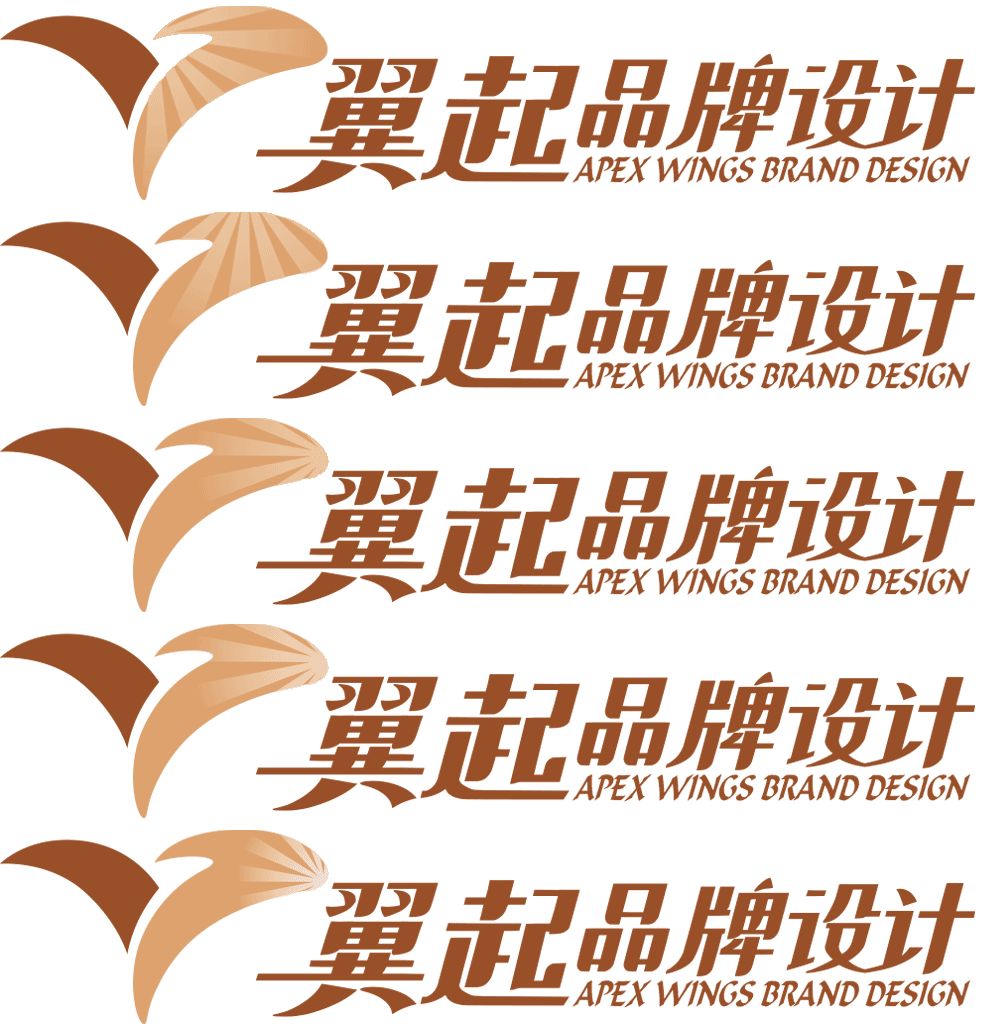
- 重复频率控制:1-3次重复效果最佳,过多会显得混乱
- 变异参数设计:在重复中引入细微变化(颜色、大小、透明度、位置)
- 视觉层级建立:明确主次关系,避免视觉混乱
数字化实现
- 利用设计软件的重复功能批量生成
- 动画中的时间轴重复效果
- 响应式设计中的自适应重复
应用场景分析
数字媒体环境
重复策略在网站、APP、社交媒体中表现突出,特别适合:
- 加载动画中的logo重复
- 滚动效果中的元素重复
- 交互反馈中的视觉重复
品牌延展应用
- 辅助图形系统
- 包装设计的节奏化处理
- 空间导视系统的重复应用
设计原则与注意事项
核心原则
- 目的性明确:重复要有设计理由,不是为了重复而重复
- 品牌一致性:在创新中保持品牌核心识别
- 适度原则:控制重复的”度”,避免过度设计
风险控制
- 避免与品牌调性不符的重复处理
- 考虑不同文化背景下的接受度
- 确保在各种媒介中的可读性
结语
重复策略为logo设计提供了新的思考维度。它不是对传统设计原则的颠覆,而是对视觉表达可能性的拓展。在合适的场景下,巧妙的重复能够创造出既具识别性又富有创意的品牌视觉体验。
作者简介:17vis.com专注于视觉设计的系统化研究,致力于探索设计背后的认知逻辑和应用方法。
相关阅读:《认知锚点:视觉转换中的logo符号设计》
English Version
When you run out of ideas, try element repetition.
Introduction
In traditional logo design cognition, simplicity, uniqueness, and easy recognition are the core principles. However, when design falls into the trap of homogenization, we need to find new ways of visual expression. Repetition, as an unconventional design strategy, is bringing new possibilities to brand visual identity.
Theoretical Foundation of Repetition Design
A Cognitive Psychology Perspective
Repetition plays a role in reinforcing memory, establishing rhythm, and creating visual focal points in visual cognition. When the same elements appear multiple times, the brain naturally seeks differences and patterns, and this cognitive process itself creates visual tension.
Repetition vs. Traditional Single Logo
Traditional logos pursue uniqueness, while the repetition strategy creates a sense of hierarchy and memory points through “differences within sameness.”
Three Main Types of Repetition Strategy
1. Complete Logo Repetition
Typical case: GOOOOOGLE
- The stretched repetition of letters creates a unique visual rhythm
- Maintains brand recognizability while adding playfulness
- Has strong viral potential in digital media
2. Element Repetition Strategy
When complete logo repetition is not suitable, extract core elements for repetition:
- Letter element repetition: Choose the most recognizable letters for deformation and repetition
- Graphic element repetition: Repeat the core graphic symbols in the logo
- Color element repetition: Repeatedly use combinations of the brand’s standard colors
3. Spatial Repetition Application
Intentionally place multiple identical or similar elements in the same visual space:
- Create visual “illusions” and “conflicts”
- Create new visual layers through repetition
- Deepen brand impression
Technical Implementation Methods
Key Design Execution Points
- Repetition frequency control: 1-3 repetitions yield the best results; too many appear chaotic
- Variation parameter design: Introduce subtle changes within repetition (color, size, opacity, position)
- Visual hierarchy establishment: Clarify primary and secondary relationships to avoid visual confusion
Digital Implementation
- Use the repetition features of design software for batch generation
- Timeline repetition effects in animation
- Adaptive repetition in responsive design
Application Scenario Analysis
Digital Media Environment
The repetition strategy stands out on websites, apps, and social media, especially suitable for:
- Logo repetition in loading animations
- Element repetition in scrolling effects
- Visual repetition in interactive feedback
Brand Extension Applications
- Supporting graphic systems
- Rhythmic treatment of packaging design
- Repetition application in spatial wayfinding systems
Design Principles and Considerations
Core Principles
- Clear purpose: Repetition should have a design rationale, not repetition for its own sake
- Brand consistency: Maintain core brand identity within innovation
- Principle of moderation: Control the “degree” of repetition to avoid over-design
Risk Control
- Avoid repetition treatments that conflict with brand tone
- Consider acceptability across different cultural backgrounds
- Ensure readability across various media
Conclusion
The repetition strategy provides a new dimension of thinking for logo design. It is not a subversion of traditional design principles, but an expansion of visual expression possibilities. In the right context, clever repetition can create brand visual experiences that are both recognizable and creative.
About the author: 17vis.com is dedicated to systematic research in visual design, committed to exploring the cognitive logic and application methods behind design.
Related reading: “Cognitive Anchors: Logo Symbol Design in Visual Transformation”

为创作者 17vis 守护知识产权,转载必须保留完整出处信息 (侵权必究)
© 2026 17vis.com All Rights Reserved. Reprint with attribution required.
为创作者 17vis 守护知识产权,转载必须保留完整出处信息 (侵权必究)
© 2026 17vis.com All Rights Reserved.